
Jan Strugnell
Professor Jan Strugnell investigates the evolution and function of marine organisms using genomic and proteomic techniques. Her research encompasses both applied and blue skies questions.
Jan investigates population and species-level molecular evolution in Antarctic and deep-sea taxa in the context of past climatic and geological change. She also applies next-generation sequencing tools to help solve bottlenecks in fisheries and aquaculture industries. Supported by the ARC, her laboratory group is investigating population differentiation, recruitment and adaptation in a range of commercially important lobster species and is investigating the genetic basis for resilience and susceptibility to temperature stress in abalone. Jan also works on marine species that are shifting range in response to climate change and employs eDNA techniques to detect rare and invasive aquatic and marine organisms.
Prof Strugnell completed her BSc (Hons) at James Cook University before obtaining her DPhil at Oxford University, UK, funded by a Rhodes Scholarship. During her DPhill she used molecular and fossil evidence to investigate phylogenetic relationship and divergence times within cephalopods (octopus, squids and cuttlefish). Prof Strugnell then worked as a post-doctoral research fellow at Queen’s University, Belfast, the British Antarctic Survey and Cambridge University, UK, where she investigated evolutionary relationships within and between Antarctic and deep-sea octopods.
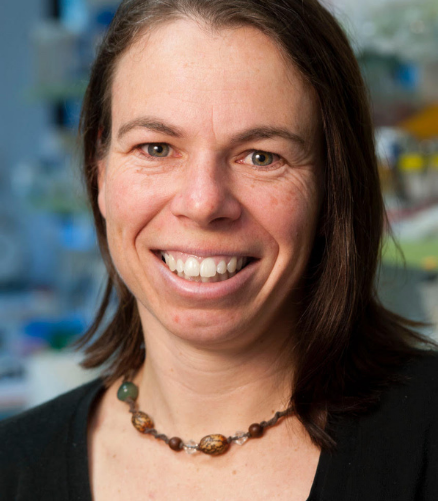
Jan Strugnell
Chief Investigator & Theme 2 Lead Mentee
James Cook University
Professor Jan Strugnell investigates the evolution and function of marine organisms using genomic and proteomic techniques. Her research encompasses both applied and blue skies questions.
Jan investigates population and species-level molecular evolution in Antarctic and deep-sea taxa in the context of past climatic and geological change. She also applies next-generation sequencing tools to help solve bottlenecks in fisheries and aquaculture industries. Supported by the ARC, her laboratory group is investigating population differentiation, recruitment and adaptation in a range of commercially important lobster species and is investigating the genetic basis for resilience and susceptibility to temperature stress in abalone. Jan also works on marine species that are shifting range in response to climate change and employs eDNA techniques to detect rare and invasive aquatic and marine organisms.
Prof Strugnell completed her BSc (Hons) at James Cook University before obtaining her DPhil at Oxford University, UK, funded by a Rhodes Scholarship. During her DPhill she used molecular and fossil evidence to investigate phylogenetic relationship and divergence times within cephalopods (octopus, squids and cuttlefish). Prof Strugnell then worked as a post-doctoral research fellow at Queen’s University, Belfast, the British Antarctic Survey and Cambridge University, UK, where she investigated evolutionary relationships within and between Antarctic and deep-sea octopods.

