
Next steps for protecting Antarctica’s rare and incredible vegetation
Almost 80% of Antarctica’s vegetation isn’t found in a protected area. Newly identified priority sites are the first step in closing conservation gaps.
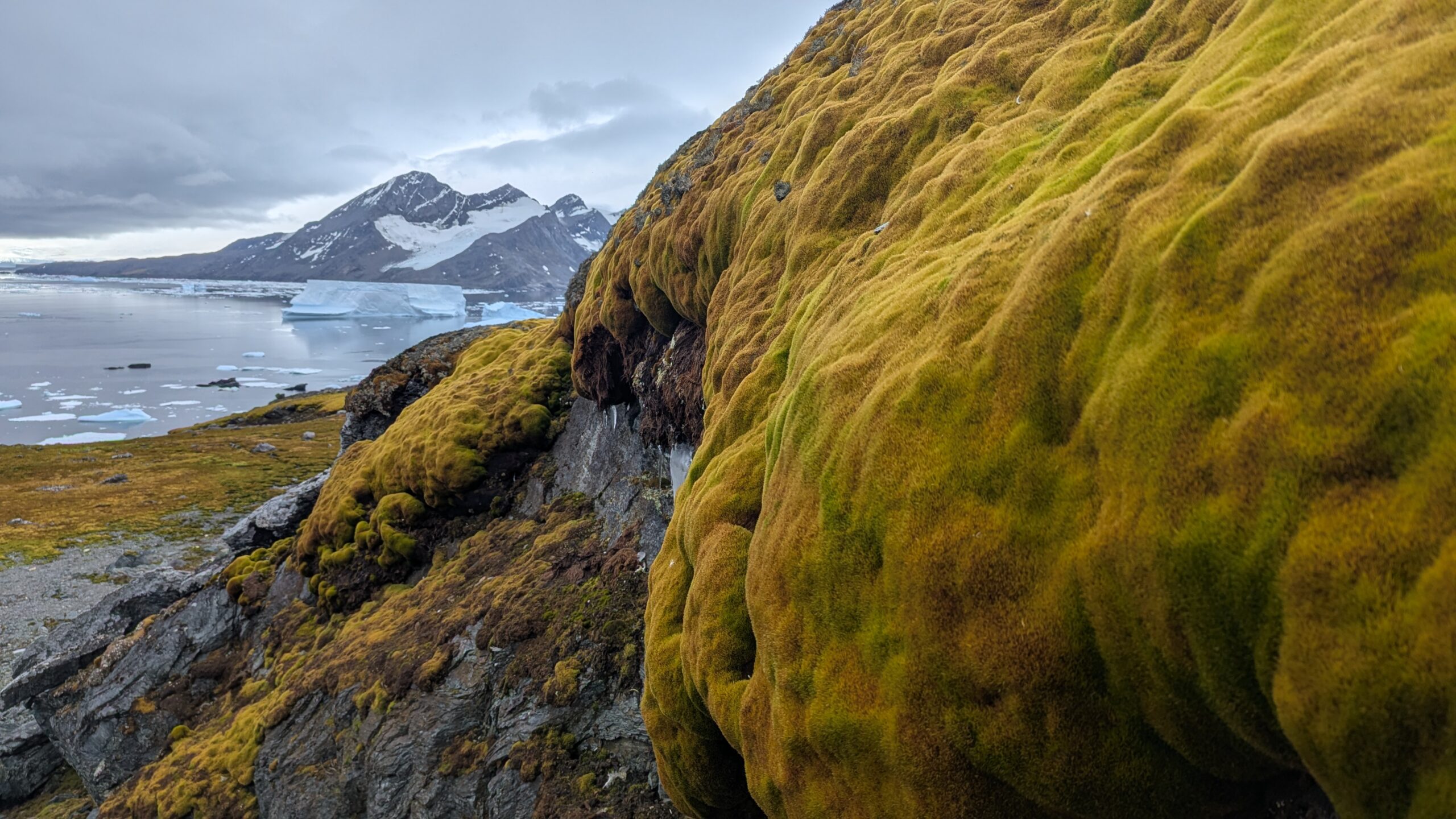
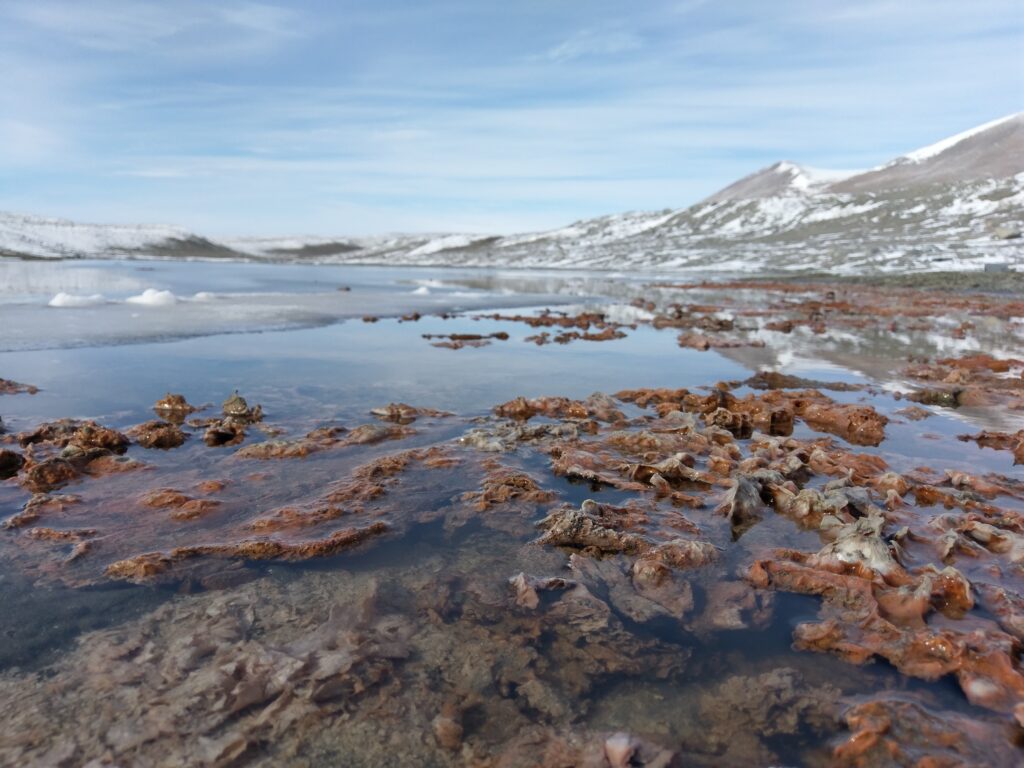
You might be forgiven for overlooking Antarctica’s mosses, lichens, cyanobacteria, green algae and two flowering plant species, which cover less than 1% of the continent’s ice-free ground.
But scientists argue that there’s very good reason not to, as this rare polar life is not only scarce, but remarkable. Some of the region’s moss banks are thought to be thousands of years old, growing by only a fraction each year. Like most Antarctic life, it has had to evolve an extraordinary tolerance to prolonged darkness, freezing temperatures and desiccation.
These often slow-growing life forms are also increasingly impacted by pressures from non-native species, changes brought about by climate change and the impacts of human activity.
Although Antarctic vegetation covers just 40.9 km2—roughly the size of 12 New York Central Parks—new research has found that only 21.4% fall within existing protected areas1,2.
“It’s easy to underestimate the significance of Antarctic vegetation because its overall area represents a small fraction of Antarctica’s ice-free ground,” says lead author Dr Charlotte Walshaw from The University of Edinburgh in Scotland, United Kingdom.
But Dr Walshaw notes it also plays a crucial role, providing rare and essential habitat and nutrient cycling for the equally unique microbes and invertebrates that call the continent home.
Uneven protection across Antarctica
“Given the already limited vegetation in Antarctica, even small losses could cause irreparable damage to the ecosystems,” explains Dr Mariana García Criado, from Trinity College Dublin in Ireland, who co-led the study.
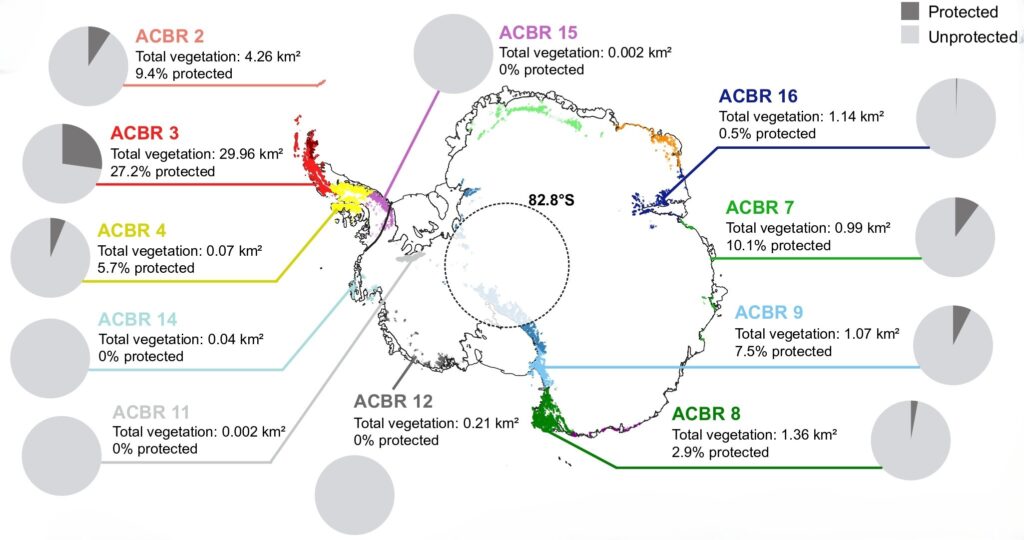
The continent is understood to contain 16 distinct ACBRs with unique flora and fauna communities. Ensuring that protected areas represent the diversity of vegetation communities within each of the bioregions is important for increasing species resilience, says Dr Walshaw. “It’s important to consider not only where protection occurs, but how well it represents the vegetation within each region,” she says.
Using continent-wide vegetation data that has only recently become available, the authors also showed that the north-west Antarctic Peninsula contains the highest proportion of protected vegetation, at 27.2%. Every other Antarctic Conservation Biogeographic Region (ACBR), apart from East Antarctica, protects less than 10% of its vegetation cover2. This is well below United Nations-led global 2030 conservation target, which aims to conserve at least 30% of terrestrial and marine areas by 20303.
Protected areas are one of the world’s best tools for conserving plants and wildlife notes senior author Dr Jasmine Lee, a Chief Investigator within Securing Antarctica’s Environmental Future at Monash University in Melbourne, Australia.
Identifying priorities for future protection
Currently, Antarctic biodiversity has formal protection through a network of protected areas known as Antarctic Specially Protected Areas (ASPAs), governed by the Antarctic Treaty System.
The team ranked potential new protected areas by how important the site was for meeting conservation goals, the confidence they had in the analysis, the area’s size (with larger being considered more robust), and how close it was to human activities that could threaten vegetation.
Fifteen high-priority sites were identified for early consideration including the Vestfold Hills, Bailey Peninsula, Taylor Valley, Arrival Heights, Fildes Peninsula and parts of Deception Island, which stood out for their biodiversity value and conservation importance.
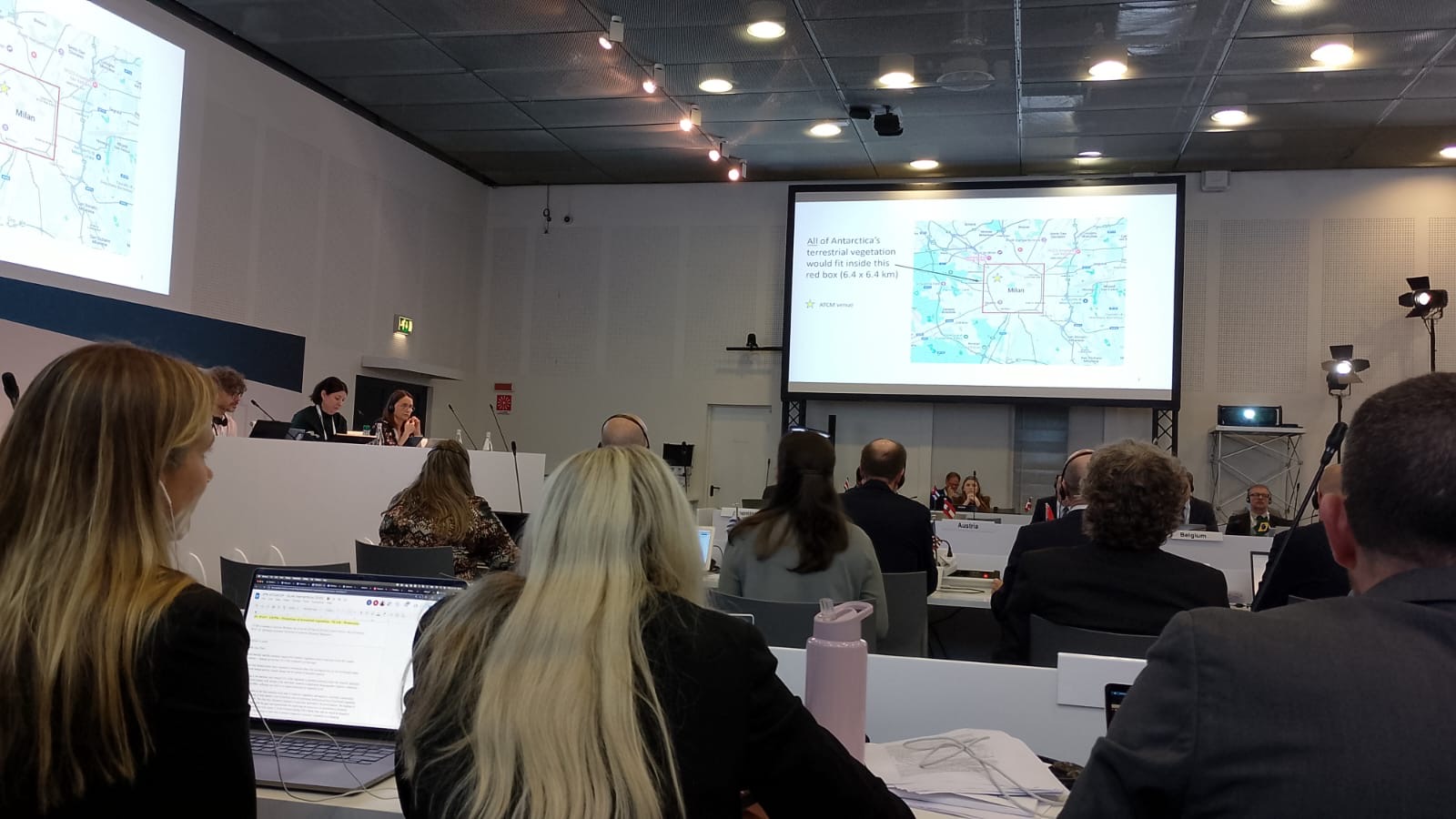
The findings were presented to policymakers at the 47th Antarctic Treaty Consultative Meeting in Milan, Italy, in 20254.
“These candidate sites are a starting point for supporting the systematic protection of vegetation within the Antarctic Treaty System. It’s important we start looking now, as the impacts of climate change and human presence increase,” says Dr Walshaw.

Presenting the new vegetation candidate sites to policymakers at the 47th Antarctic Treaty Consultative Meeting in Milan. Credit: G Stefanelli Silva
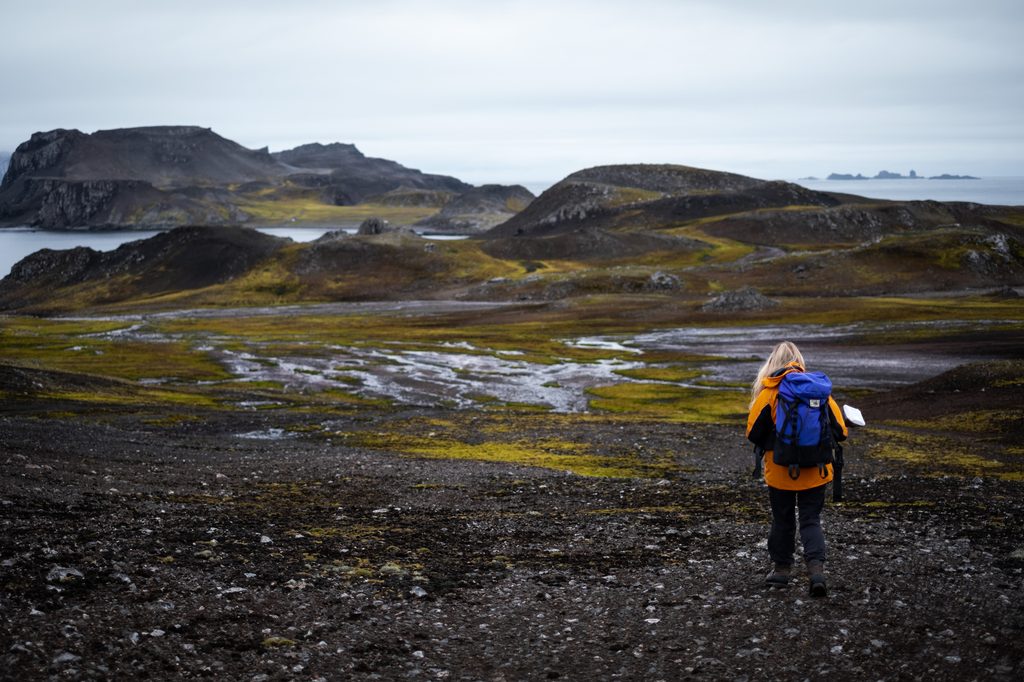
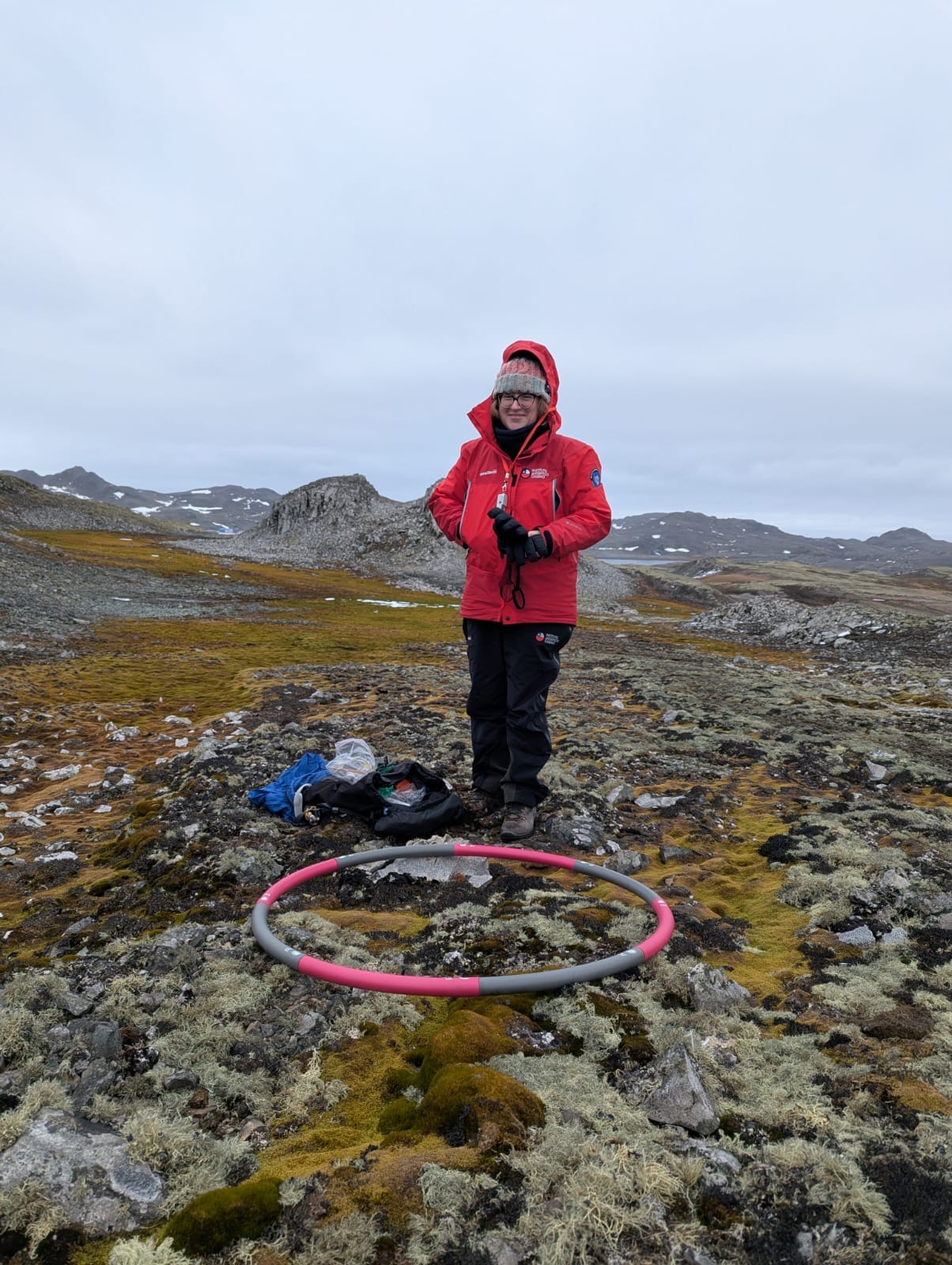
Dr Mariana García Criado sampling vegetation in Ardley Island in February 2026. Credit: Mariana Garcia Criado
While many of the highest-ranked sites were identified by both satellite observations and biodiversity models, the next step is to confirm the existence of important vegetation and gather the data required for protected area management plans through ground surveys and drone imagery, she says.
The study was led by researchers at The University of Edinburgh in Scotland, Securing Antarctica’s Environmental Future based at Monash University in Australia, Centre for Ecological Research and Forestry Applications in Spain, Trinity College Dublin in Ireland and the British Antarctic Survey in the United Kingdom.
References
- Walshaw, C.V., Gray, A., Fretwell, P.T. et al. A satellite-derived baseline of photosynthetic life across Antarctica. Nature Geoscience. 17, 755–762 (2024).
- Walshaw, C.V., García Criado, M., Hughes, K.A. et al. Identifying priorities for systematic Antarctic vegetation protection at the continental scale. Biological Conservation (2026).
- Secretariat of the Convention on Biological Diversity. COP15: Final text of Kunming-Montreal Global Biodiversity Framework. Convention on Biological Diversity (2022).
- SCAR. Informing systematic protection of Antarctic terrestrial vegetation. In: Information Paper 147. Antarctic Treaty Consultative Meeting 47. Milan, Italy, 23 June–3 July 2025.


