Why Earth’s ice may need its own planetary boundary
Earth’s frozen regions are moving beyond a 'safe operating space'. Is it time for a tenth planetary boundary?
A team of more than 30 international researchers have analysed Earth’s frozen regions—collectively known as the cryosphere—and concluded that much of it is operating outside of the ‘safe’ constraints within which human societies have flourished.
The work, published in Science, could pave the way for the inclusion of the cryosphere as a new planetary boundary—science-based limits that show governments and society how we’re tracking on everything from climate change to ocean acidification.
The scientists involved argue that the world’s ice has been largely overlooked due to late-emerging understandings of these systems, but that it plays a fundamental role in regulating Earth’s climate, water, ecosystems and sea level.
The findings coincide with COP31 and follow two major UN-backed reports released last week that concluded significant cryosphere losses are already unavoidable and map scenarios for the world’s ice after we overshoot 1.5°C average warming above pre-industrial levels in the 2030s.
Led by Dr Bo Su of the Stockholm Resilience Centre and co-authored by planetary boundaries pioneer Professor Johan Rockström, the Science paper assessed four indicators of cryosphere health and found that sea ice area, snow cover and permafrost temperature have already moved beyond the ‘safe operating space’ that prevailed during the relatively stable 11,700-year Holocene period in which human civilisation developed.
While the fourth indicator, land ice area—almost 90% of which is found in Antarctica—remains within that range today, the study concludes that because losses can be set in motion far in advance, we must be more aware of when we’re committing to centuries of future ice loss.

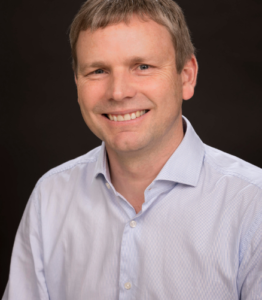
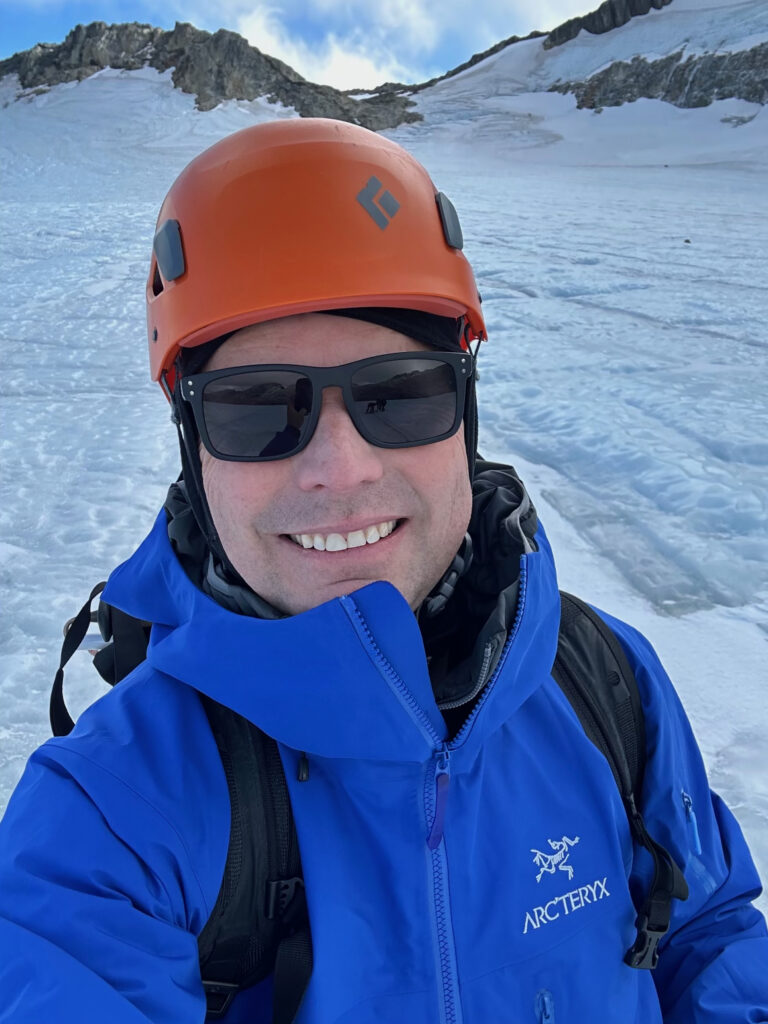
Paper co-author Professor Andrew Mackintosh is a Chief Investigator at SAEF. Antarctica’s ice sheet accounts for 90% of the world’s land ice, and our actions today could impact its behaviour hundreds of years. Credit: Madison Farrant.
Antarctica’s ice responds at different time scales
Australian co-author, earth and climate scientist Professor Andrew Mackintosh from Securing Antarctica’s Environmental Future at Monash University, says the behaviour of Antarctica’s ice sheet highlights why ice wasn’t one of the first nine planetary boundaries.
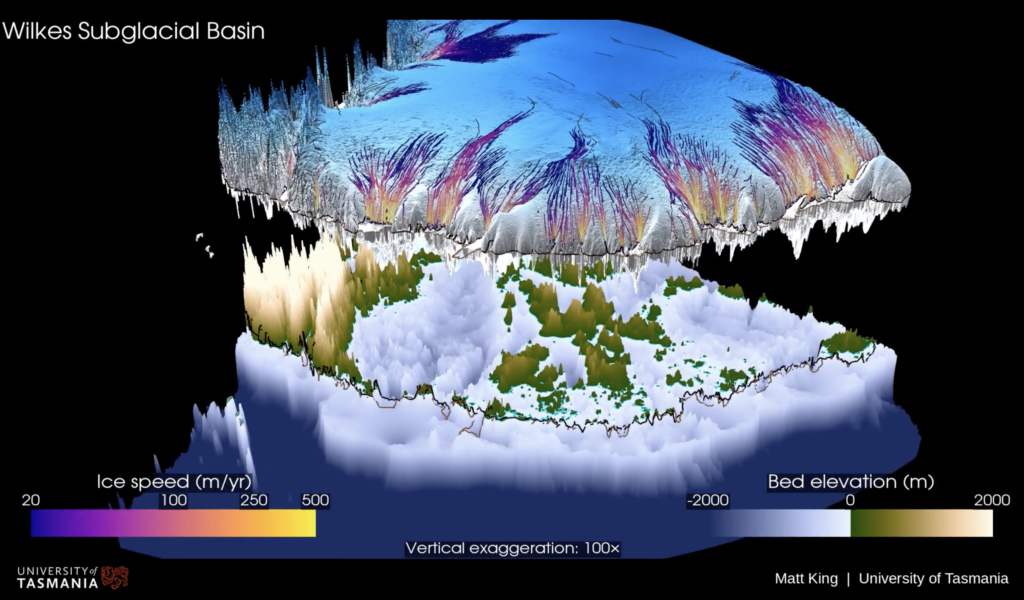
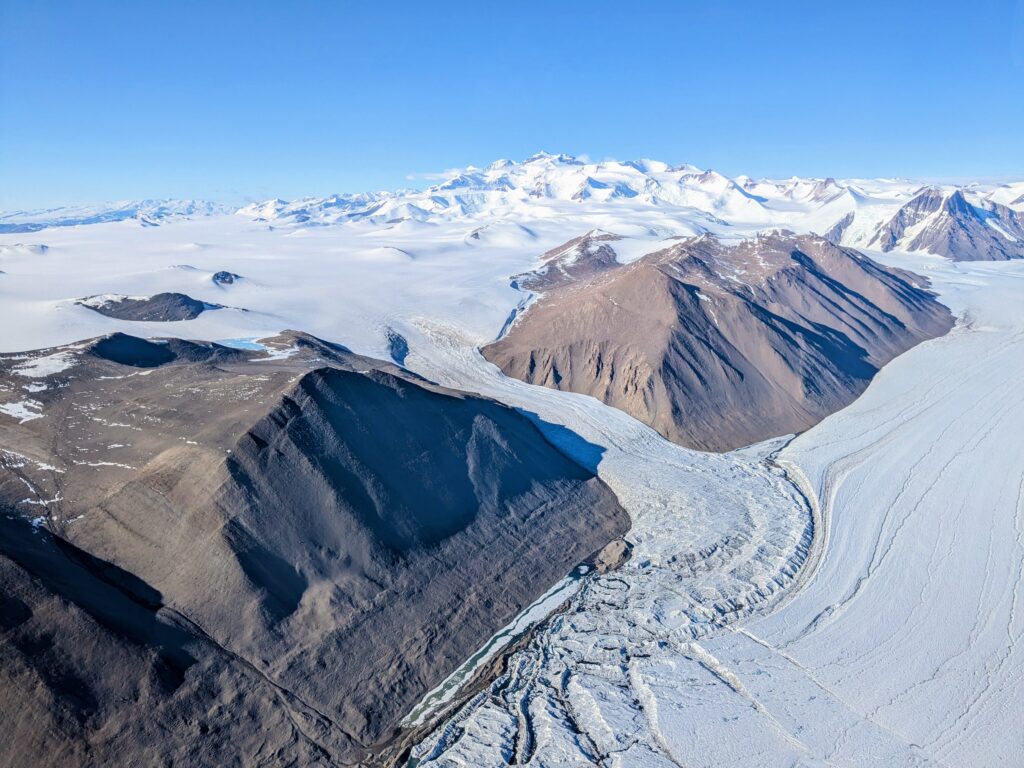
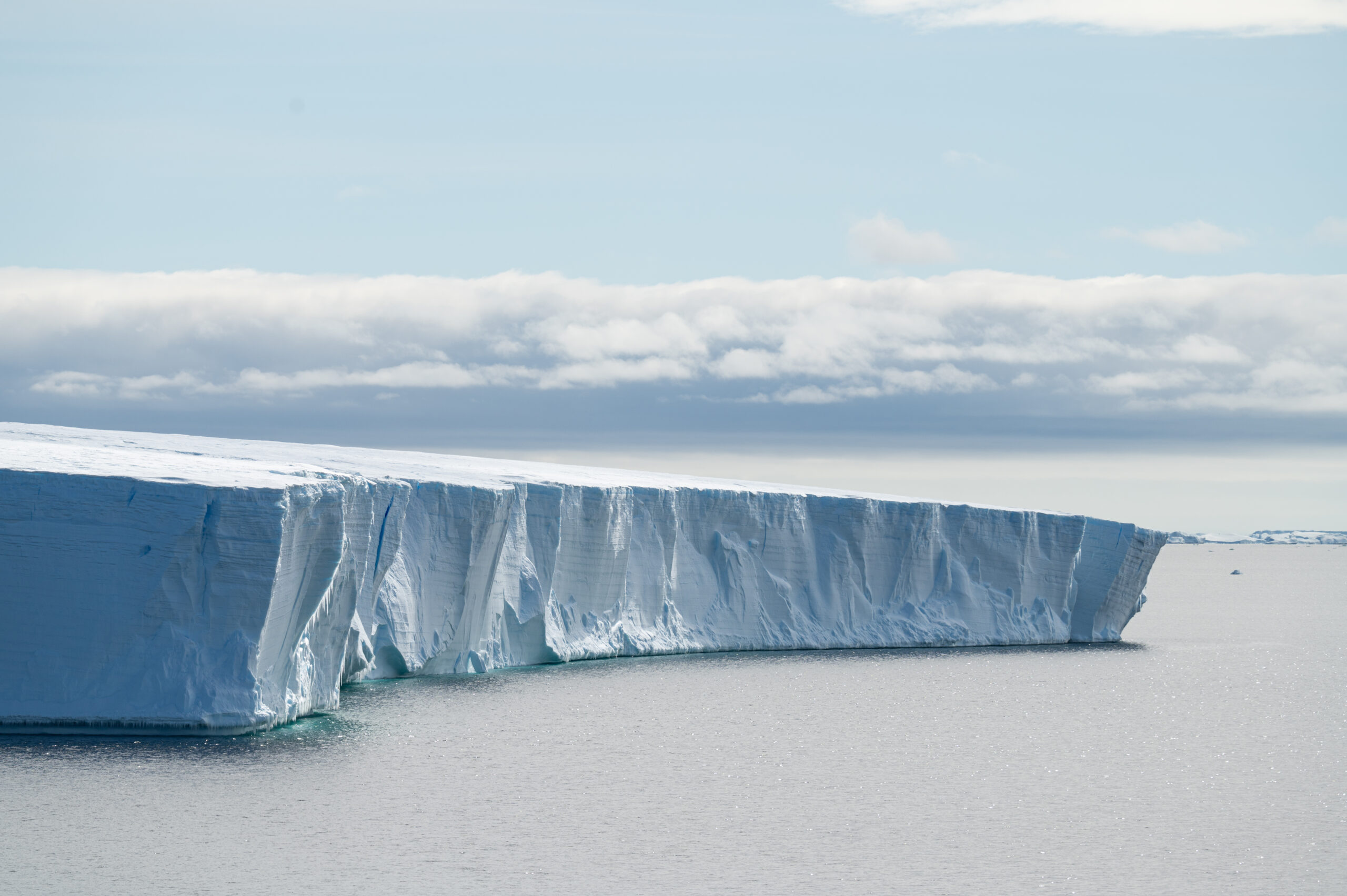
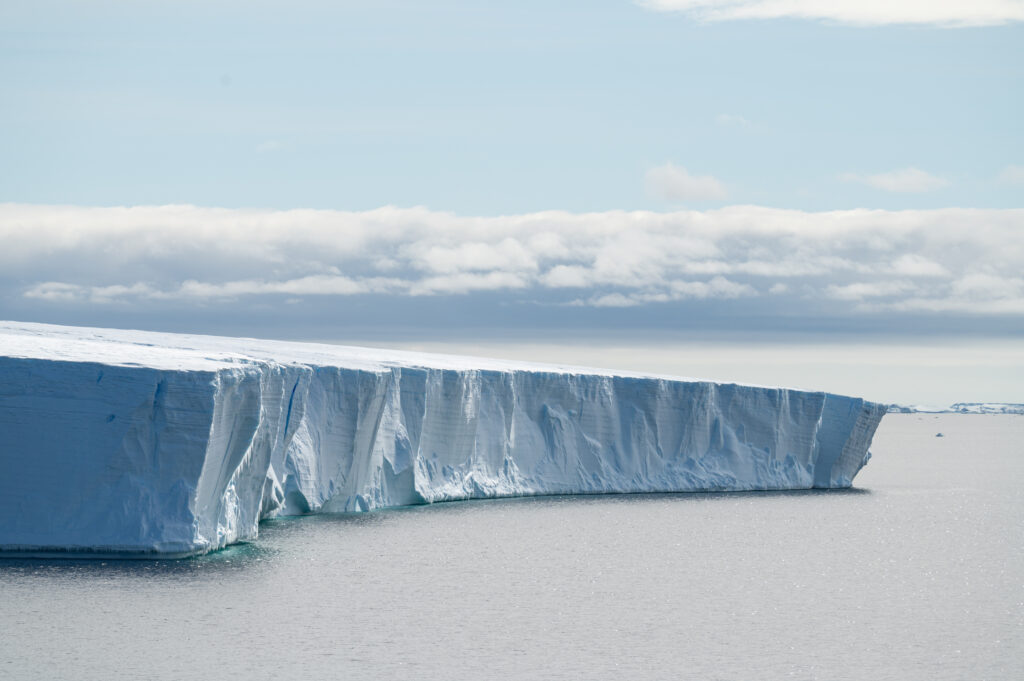
“Antarctica’s continental ice sheet—covering an area larger than Australia with kilometre-thick ice—is the world’s largest ice reserve, capable of driving multi-metre sea level rise. The danger with Antarctica is that it isn’t flashing warnings obvious to everyday people,” he says.
“What makes ice different is that it remembers. Even if temperatures stabilise, parts of the world’s land ice can be locked into processes that keep it changing for centuries, meaning today’s warming commits future generations to impacts they didn’t create.”
A dedicated cryosphere boundary, says Mackintosh, would give government and business a much more realistic idea of how the world is faring—and the actions needed to make sure we don’t pass on unforeseen impacts to later generations.
“What we do this decade could determine ice melt and sea levels for generations. By helping to define a safe operating space for the cryosphere within the planetary boundaries framework, the research provides a clearer benchmark for assessing progress and informing climate decision-making at future COP negotiations,” he says.
The paper was led by researchers at the Stockholm Resilience Centre at Stockholm University, as well as researchers from the Potsdam Institute for Climate Impact Research (PIK), Tsinghua University, Beijing Normal University, the Earth Commission, the International Association of Cryospheric Sciences (IACS), the Climate and Cryosphere (CliC) Project of the World Climate Research Programme (WCRP), the Third Pole Environment Programme, and the WWF Arctic Programme.
Researchers affiliated with Australian institutions include Professor Andrew Mackintosh (Securing Antarctica’s Environmental Future, Monash University), Professor Petra Heil (British Antarctic Survey; Australian Antarctic Program Partnership, University of Tasmania), Distinguished Professor Xuemei Bai (Fenner School of Environment & Society, Australian National University; Institute for Future Initiatives, The University of Tokyo), Associate Professor Steven J. Lade (Fenner School of Environment & Society, Australian National University; Stockholm Resilience Centre, Stockholm University) and Dr Ben Stewart-Koster (Australian Rivers Institute, Griffith University).