
Antarctic neighbourhood watch: Protecting ecosystems through expanded monitoring

Credit: Madison Farrant 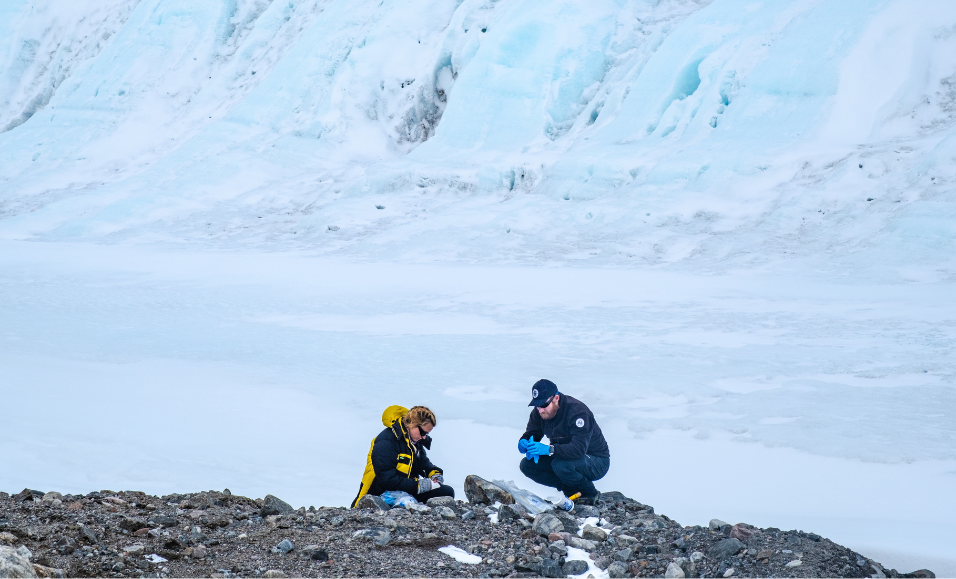
Credit: Richard Jones 
Credit: Julian Galvez & Matthew Swan 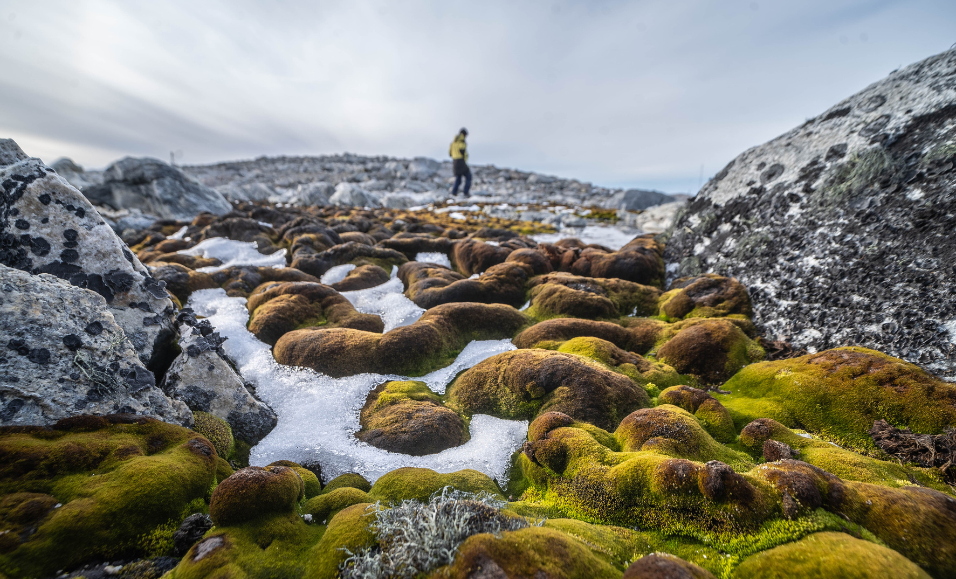
Credit: Emiliano Cimoli
Imagine a scientist offered you a ticket to Antarctica on the proviso you helped count penguins. Would you do it for the rare chance to see (and smell) a penguin colony? Or because you wanted to help with penguin research?
For many, it’s likely a bit of both. Perhaps the opportunity to help scientists monitor the long-term health of the penguins, might make the opportunity even more appealing. But would you still be as excited to join a project to assess the spread of a grass like Poa annua or the numbers of one of Antarctica’s only insects, Belgica antarctica?
If you’d prefer to count penguins, then you probably won’t be surprised to hear there is a bias in Antarctic research towards studying charismatic animals, such as penguins and seals. In fact, over 60% of long-term monitoring studies focused on these creatures, while only 15% focused on species such as moss, lichens and microbes—which are equally crucial to ecosystems and deserving of protection.
So how do we fix this bias and ensure all Antarctic wildlife receive the attention and protection they deserve?
This is the subject of a new study by SAEF researchers from the University of Wollongong (UOW), published in Global Change Biology. They have done a deep-dive into how well scientists are monitoring life along Antarctica’s coasts and used the lessons to offer a series of recommendations to improve future monitoring efforts so they can better track change and inform conservation policy.
The work forms part of an Australian Laureate Fellowship led by SAEF Deputy Director Distinguished Professor Sharon Robinson which seeks to develop new, innovative methods to monitor Antarctic biodiversity.
“Long-term monitoring allows us to understand how the biological communities around us are responding to increasing global threats, such as climate change,” SAEF PhD student Shae Jones from UOW explains.
“As these threats continue to grow, detecting and understanding how biological communities are responding has become increasingly important. By monitoring species over extended periods, we can distinguish short-term fluctuations from long-term shifts and patterns for species and ecological communities. This understanding allows us to have better-informed conservation and management practices.”
Fortunately for Antarctic wildlife, environmental protection is central to the Antarctic Treaty System via the Protocol on Environmental Protection. But despite this, challenges remain.
“Antarctica is a unique but extremely challenging place to work. This presents a challenge to repeatedly monitor the same site, ecosystems and biology year after year, or decade after decade,” SAEF researcher, Dr Melinda Waterman from UOW said.
“Our review shows we need more consistent, representative and widespread long-term monitoring to better protect the fragile ecosystems across Antarctica.”
The research team has come up with a range of recommendations to achieve this including:
- Long-term monitoring efforts are currently concentrated along the west side of the Antarctic Peninsula, with gaps across other parts of the continent, particularly in East Antarctica. The team recommends expanding monitoring efforts to fill those gaps, with a focus on understudied regions and ecosystems, as well as the 16 Antarctic Conservation Biogeographic Regions, Marine Protected Areas and Antarctic Specially Protected Areas.
- Standardising data collection methods would align long-term monitoring projects making it easier for scientists to share data, make comparisons across ecosystems and establish international research collaborations. To support this, projects could have a tiered approach to meet varying levels of funding, resources, expertise and time in the field.
- Ensuring environmental data (such as temperature, wind speed, etc.) are collected as part of each long-term monitoring project would ensure scientists can establish how ecosystems are being impacted by a changing climate.
- Long-term commitments to funding and logistics support is crucial to enabling monitoring projects to support conservation efforts over the long-term.
- Finally, each of these recommendations will rely on international collaboration at all levels.
Currently, there are a range of efforts being made to develop Antarctic-wide observation systems, such as the Antarctic Nearshore and Terrestrial Observation System (ANTOS) by the Scientific Committee on Antarctic Research (SCAR) and Antarctica InSync. These projects aim to close the gaps in current monitoring efforts by aligning data collection methods and facilitating data sharing and collaborations.
In addition, SAEF researchers are working to develop new technologies to support these efforts.
“I would like to see smarter and more efficient ways to monitor Antarctica’s living things that reduce our impact on the environment. This could be achieved as current and emerging technology advances,” Dr Waterman said.
SAEF researchers based at UOW and NVIDIA are working on an Artificial Intelligence of Things (AIoT) platform which has the ability to provide continuous data and images about the Antarctic environment where it is installed. They have been trialling it in moss ecosystems in the Windmill Islands, but hope to expand its use to other ecosystems and regions too. In addition to this research, the SAEF team at QUT are developing new methods to map and identify biodiversity using drones and artificial intelligence.
“Sending real-time information without the need to step foot onto the continent will be a powerful way to capture biological responses to extreme events as they happen,” Dr Waterman said.
Protecting Antarctica’s biodiversity means far more than counting penguins. By expanding monitoring, unifying data collection and harnessing new technologies we can ensure we collect the evidence needed to help safeguard Antarctic biodiversity amid a changing climate.
Read more
Jones, S.L., King, D., Cummings, V.J., Robinson, S.A. & Waterman, M.J. (2025) Research bias in long-term monitoring of Antarctic nearshore marine and terrestrial biota. Global Change Biology. https://doi.org/10.1111/gcb.70392


