
Q&A: Building connections and insights across the sub-Antarctic
In 2025, Dr Sam Beale (SAEF, Monash University) and Professor David Renault, Director of the French Polar Institute (Institut polaire français Paul-Émile Victor, IPEV), were awarded an Antarctic Research Grant (ARG), an initiative of the Embassy of France, the Australia France Research and Innovation Network (AFRAN) and Monash University. Their project Towards Open Biodiversity Knowledge for the Sub-Antarctic – An Australian-French Initiative aims to improve the sharing and use of biodiversity data across French and Australian sub-Antarctic territories. We spoke with Sam about how the project is helping strengthen collaboration across the sub-Antarctic research community.
What is your Antarctic Research Grant project about?
While biodiversity data from across the sub-Antarctic already exists, it’s often scattered across institutions, countries and formats. We’re working with French colleagues to standardise historical datasets from different French and Australian islands using a new version of an internationally recognised biodiversity data standard, the Darwin Core Data Package (released June 2025).
One of our main goals is to make it easier to share and use each other’s data so that we can start asking more complex questions about environmental change, biodiversity and conservation across Southern Ocean islands.
Currently, we are also developing a synthesis paper on biodiversity research across the region to facilitate collaboration on key questions, particularly those related to the impacts of environmental change.

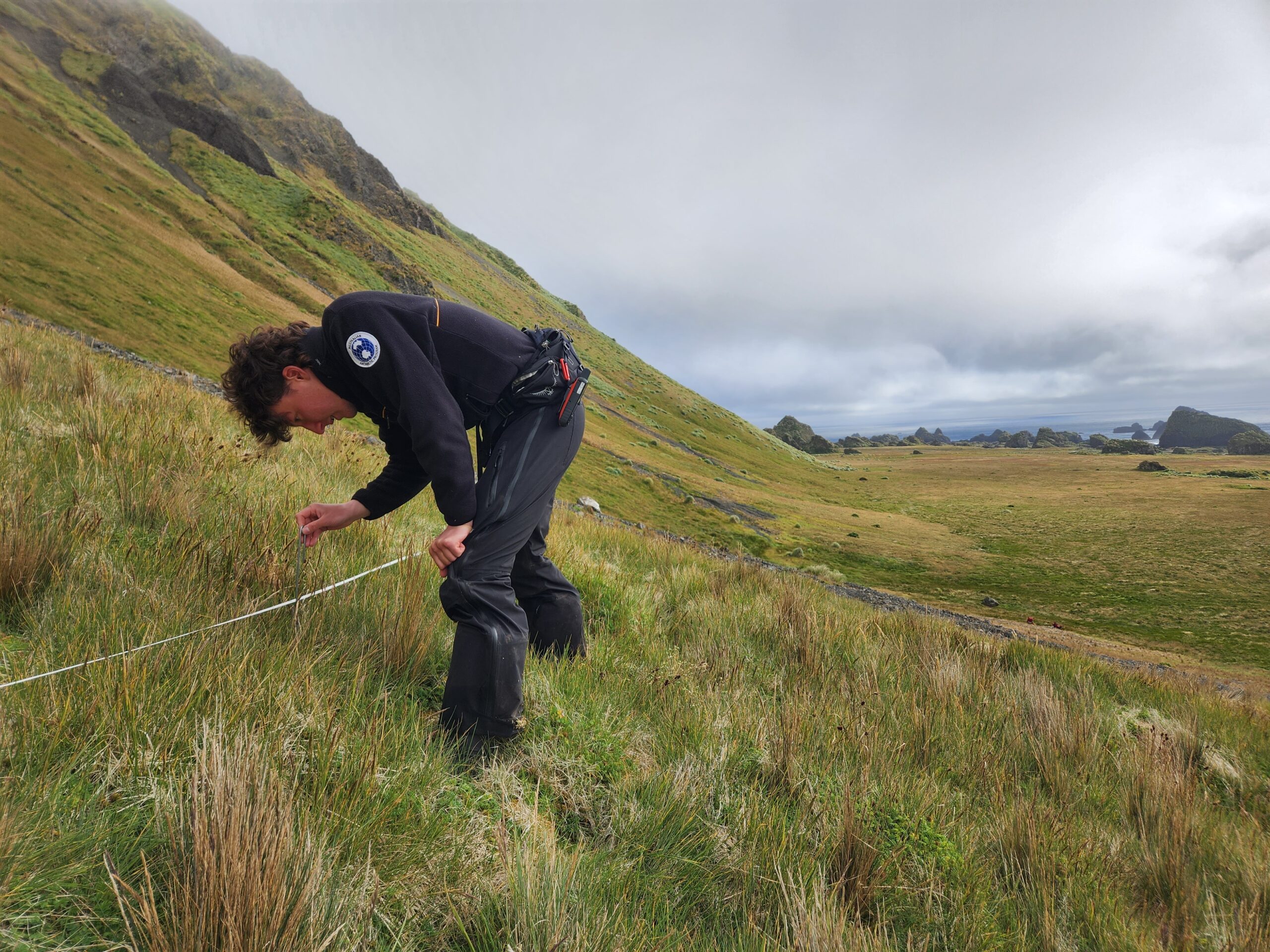
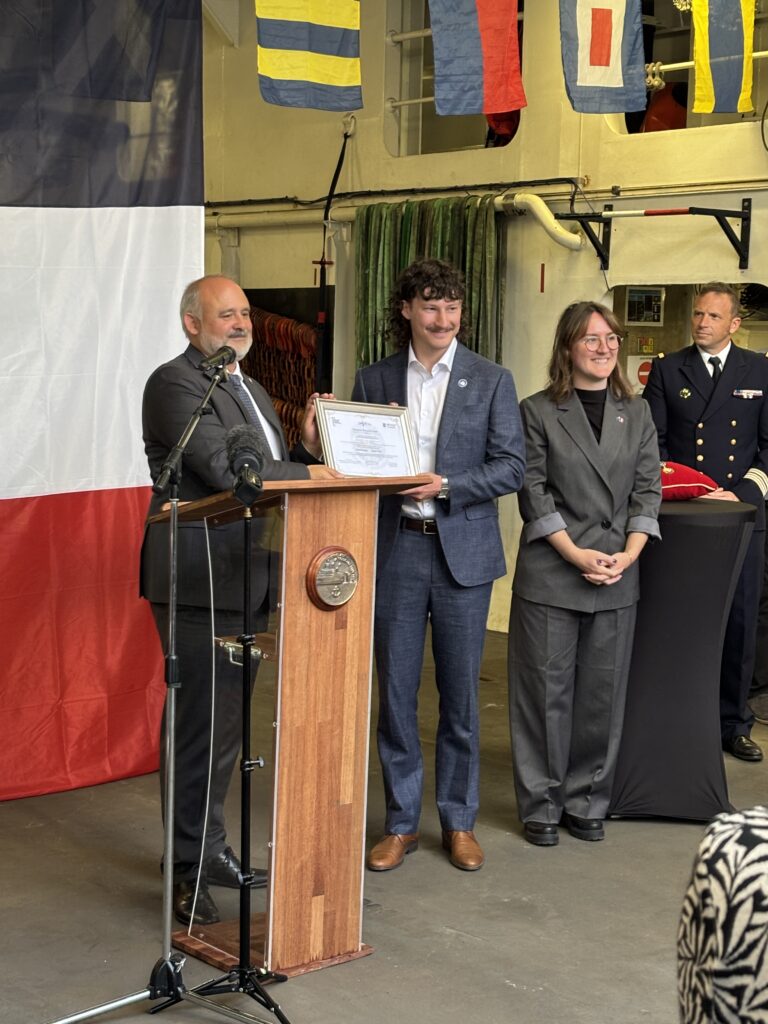
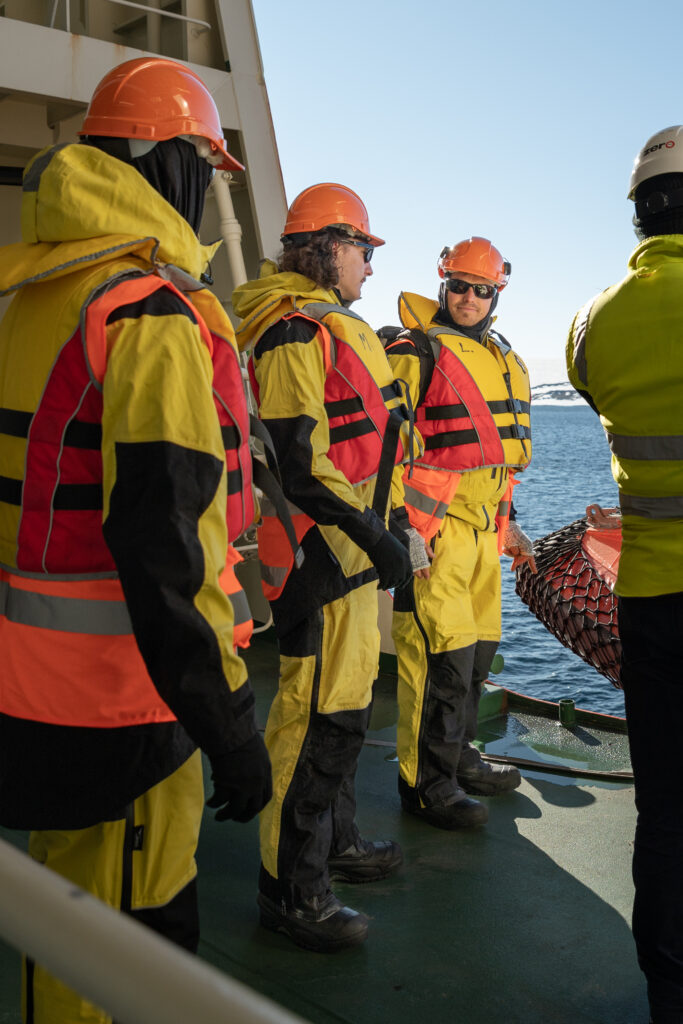
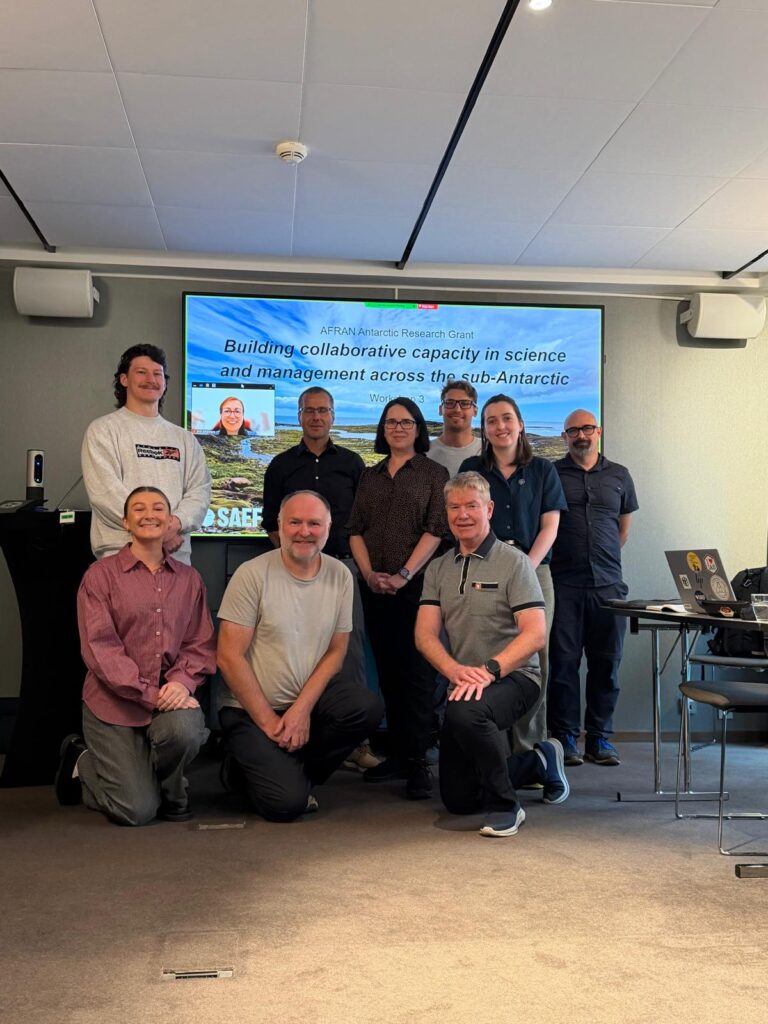
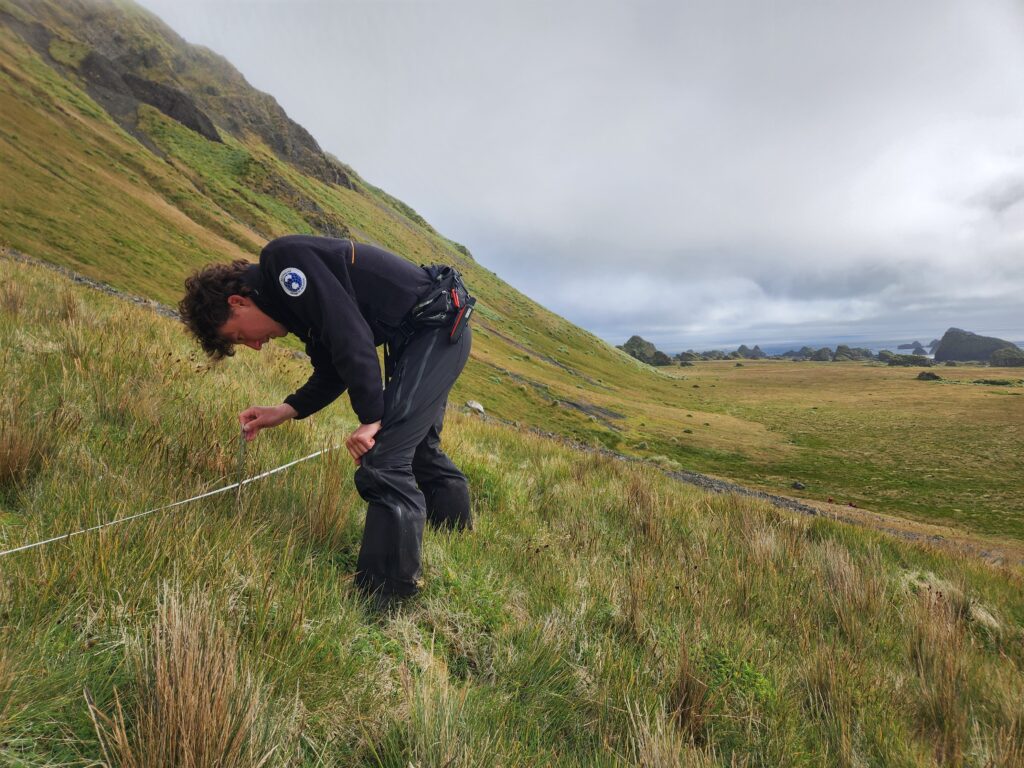
H.E. Mr Pierre-André Imbert, former Ambassador of France to Australia, and Dr Sam Beale, SAEF Research Fellow, Monash University, at a ceremony for the French-Australian Antarctic Research Grant last year. Dr Sam Beale (centre) in the field. Credit: Madison Farrant Researchers from France, Australia, Belgium and Norway came together in Oslo for a planning workshop to enhance sub-Antarctic knowledge sharing. Dr Sam Beale doing research on Macquarie Island in the sub-Antarctic. Credit: Alistr Woitkowiak
Why focus on the Heard, McDonald, Kerguelen and Crozet islands?
Thus far, the collaboration has focused on Australia’s Heard and McDonald islands and the French Kerguelen and Crozet islands, as they are relatively close geographically.
Despite this, these sub-Antarctic islands and others have experienced very different environmental histories, and are not necessarily subject to the same pressures from climate change (see Beale et al., 2026).
Heard Island remains one of the world’s least-disturbed island ecosystems, with few native species and very few introduced species. But we also have relatively limited monitoring data from Heard Island. The Kerguelen islands, by contrast, has a much greater diversity of native and non-native species, and benefits from decades of ecological monitoring supported by a permanent French research presence.
By bringing data and expertise together from these islands, researchers can begin looking at how their ecosystems respond to a range of different pressures.
How has the Antarctic Research Grant helped make this work possible?
The Antarctic Research Grant has given us the opportunity to convene researchers from France, Australia, Belgium and Norway, among others, to develop initiatives across the sub-Antarctic and Southern Ocean.
Earlier this year, for example, our team held our first face-to-face workshop alongside the SCAR Conference in Oslo, bringing together researchers from different backgrounds and different parts of the sub-Antarctic research community. More workshops are being planned.
What has come from the project so far?
One outcome has been the development of approaches to make sub-Antarctic biodiversity data more FAIR (findable, accessible, interoperable and reusable).
It’s about creating a baseline. Once data are organised in the same way, future researchers can draw on it more easily.
The team is also developing a synthesis paper that examines how well current monitoring and research efforts can detect biodiversity change across the sub-Antarctic, and whether existing policy frameworks are equipped to respond.
What do you hope comes from the project in the long term?
The immediate goal is to strengthen connections between researchers and create a foundation for future work.
More broadly, we’d like to see a more connected sub-Antarctic research community. There’s already a lot of excellent science happening across the region, and much to be gained from linking this research across local, regional, and global scales.
We hope to develop an online presence and build towards this through initiatives such as SCAR’s C-CAGE, which aims to use natural environmental gradients across Antarctica and the Southern Ocean to better understand how ecosystems and biodiversity respond to climate change and how they can be conserved.
Similar efforts have been attempted before, but maintaining long-term networks across different countries, institutions and disciplines has proven challenging. We’re certainly not claiming to solve that overnight, but by bringing people together, identifying shared priorities and building relationships, the Antarctic Research Grant is helping us lay the foundation for a more connected and enduring sub-Antarctic research community.
Please visit our grants page to find out how to apply to the Antarctic Research Grant 2026.
It’s about creating a baseline. Once data are organised in the same way, future researchers can draw on it more easily.
Dr Sam Beale


