
Caitlin Selfe
Caitlin Selfe is studying for her PhD based on palaeoclimatology at Queensland University of Technology (QUT). Her project focuses on reconstructing Holocene (last 12,000 yrs) Southern Hemisphere westerly wind (SHW) patterns and temperature from lake sediments on sub-Antarctic Macquarie Island. She is interested in links between climate systems and variables (such as wind and temperature) and specifically how changes in the SHW will impact ecosystems and large-scale climate systems like the Southern Ocean carbon sink.
Caitlin recently received the AINSE Residential Research Scholarship (RSS) and Trans-Antarctic Association Award in support of her research. She holds a Masters of Sustainability (USyd) and a Masters of Marine and Antarctic Science (UTAS). Her previous studies focused on improving the efficacy of measuring phytoplankton cellular properties using flow cytometry.
Caitlin is interested in securing the future of Antarctic environments as she believes they have the power to greatly improve our understanding of past climates and modern climate change.
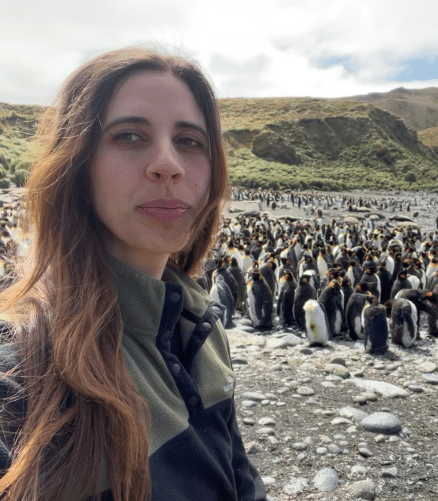
Caitlin Selfe
PhD Student
Queensland University of Technology
Caitlin Selfe is studying for her PhD based on palaeoclimatology at Queensland University of Technology (QUT). Her project focuses on reconstructing Holocene (last 12,000 yrs) Southern Hemisphere westerly wind (SHW) patterns and temperature from lake sediments on sub-Antarctic Macquarie Island. She is interested in links between climate systems and variables (such as wind and temperature) and specifically how changes in the SHW will impact ecosystems and large-scale climate systems like the Southern Ocean carbon sink.
Caitlin recently received the AINSE Residential Research Scholarship (RSS) and Trans-Antarctic Association Award in support of her research. She holds a Masters of Sustainability (USyd) and a Masters of Marine and Antarctic Science (UTAS). Her previous studies focused on improving the efficacy of measuring phytoplankton cellular properties using flow cytometry.
Caitlin is interested in securing the future of Antarctic environments as she believes they have the power to greatly improve our understanding of past climates and modern climate change.

