

SAEF team undertakes research expedition to oasis in the Antarctic desert

A team of SAEF scientists is on their way south to the Schirmacher Oasis in Dronning Maud Land to study the region’s delicate moss and lichen and deploy a new autonomous environmental monitoring system. Their work will generate vital data to support long-term monitoring and protect these miniature ecosystems, not only in this oasis, but across the continent, as the climate continues to change.
Dr Krystal Randall, Dr Johan Barthélemy and Elka Blackman from the University of Wollongong will travel to Antarctica with logistics support from SAEF partner White Desert. After a week of training at Wolf’s Fang camp, including glacier travel and rescue techniques, the team will board a Twin Otter for the flight to the Schirmacher Oasis.
The Schirmacher Oasis is a rare, ice-free enclave, wedged between the Antarctic ice sheet and a large floating ice shelf. Dotted with around 100 lakes, it is alive with hardy and resilient mosses and lichens which provide habitat for tiny invertebrates such as springtails.
While in the oasis, the team will carry out biodiversity surveys and gather data to understand how subtle shifts in microclimate within the moss beds shape the invertebrate communities living among them. They will also extract long strands of moss, or “moss cores”, which can be carbon-dated to reveal past climate and environmental conditions. In these ice-free areas, moss is the only available climate proxy, offering a valuable window into how growth conditions have changed over the past 50 – 100 years. The new samples will add to the team’s expanding dataset of moss specimens from across the continent.
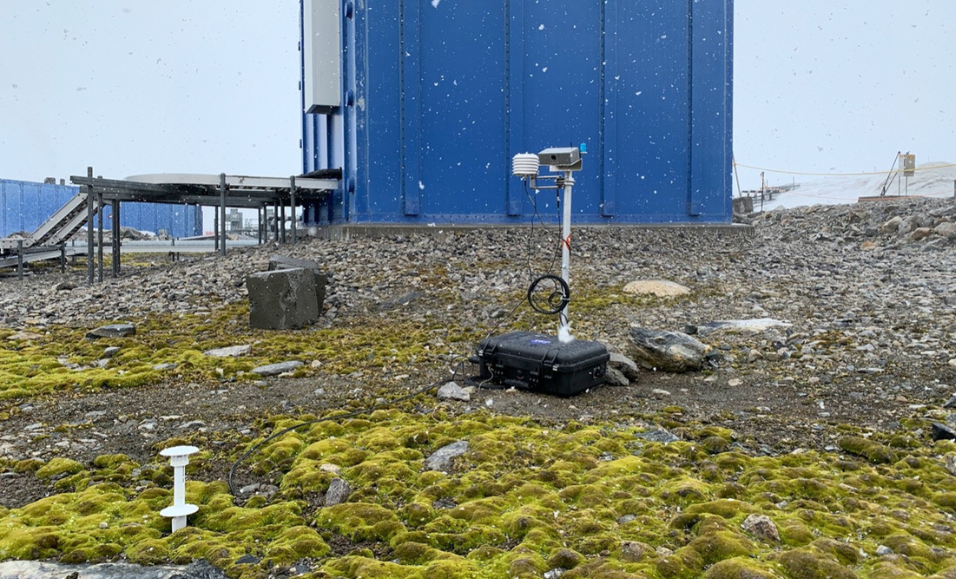
For the past four years, Dr Barthelemy, Dr Randall and colleagues at the University of Wollongong and NVIDIA have been developing a smart autonomous environmental monitoring system known as the AIoT (Artificial Intelligence of Things) platform. Short 1-3 month deployments in Antarctica in 2023 and 2024 have provided valuable insights that have enabled the team to further refine and optimise the system.
“This expedition will allow the team to deploy and test the third version of the AIoT platform in a remote environment. This iteration is fully autonomous and can be installed in very remote locations thanks to its batteries and solar panels, as well as the satellite connectivity to transmit data back to Australia in real-time,” said Dr Bathélemy
“Being able to test the platform in the field is very important to validate the technology we have developed for Antarctic conditions. Once installed in Antarctica, the platform will remain there for a period of 12 to 18 months, continuously collecting and transmitting environmental data and images all year round, which will allow the researchers to get access to a new source of data for their work. It is like having a research assistant always in the field collecting data for you.”
Dr Randall said that this is a huge advancement in the team’s ability to monitor moss beds in Antarctica.
“We typically only get a few weeks of data every couple of years, with large gaps where we have no idea what has happened to the moss and why it looks different,” said Dr Randall.
“This continuous year-round data will capture the transition periods into and out of summer, which are periods that are potentially very important for the mosses, but we’ve never been able to capture, so we will be able to answer more biological questions from this season’s data than we have before.”
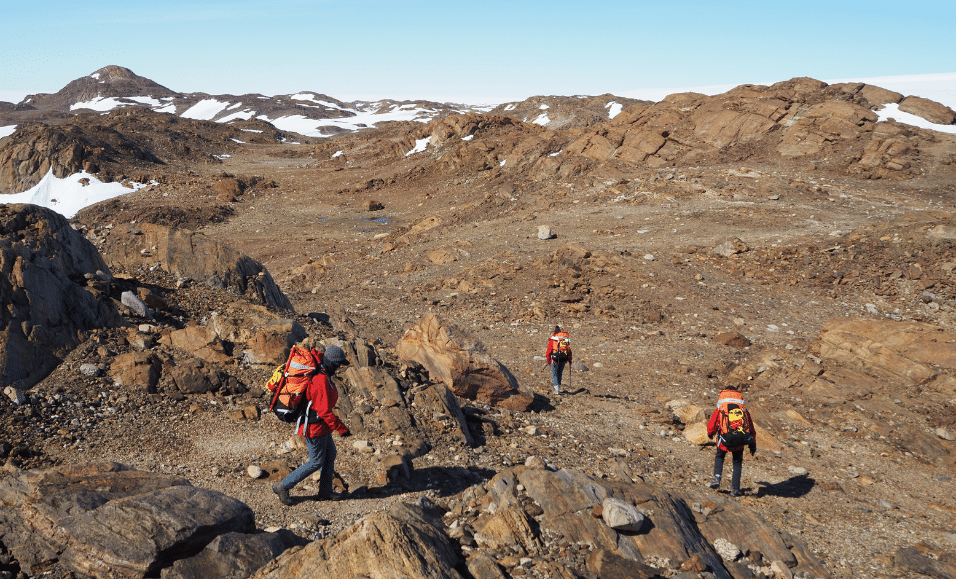
Research assistant Elka Blackman said that she was excited to be heading south on her first Antarctic expedition.
“I’m really excited to head to Antarctica as a researcher, it has been a life long dream of mine. Being able to take the science out of the laboratory and into the field will give me a whole new understanding of the moss and lichens I have been studying. I’m most excited to see these ecosystems in action as I imagine it will spark new questions and ideas for future study in our endeavours to protect them.”
The team will travel to Antarctica with SAEF logistics partner White Desert, flying from Cape Town in mid-December and returning in late-January. Follow their expedition via SAEF’s Instagram and LinkedIn.


