
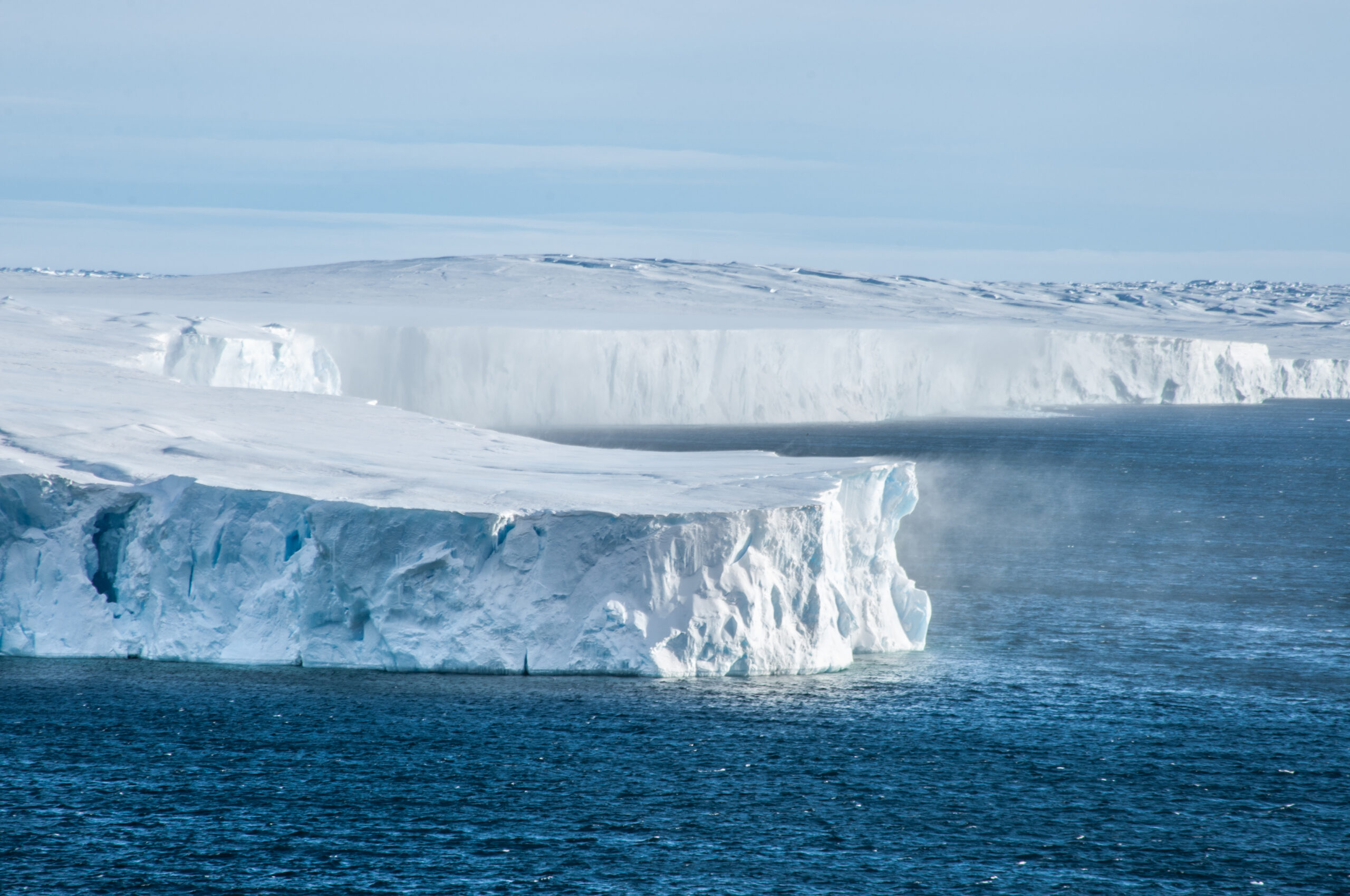
Antarctica offers 30 years of predictability in sea-level rise
Three decades of clarity provide a window for coastal planning.
Antarctica has long been a wild card in sea-level projections, combining an enormous and unmatched ice mass with large uncertainties in when it will rapidly retreat. Yet a new study published in Nature suggests that the continent’s ice loss will remain predictable until mid-century.
The synthesis of ice-sheet model projections was motivated by the latest IPCC report, which raised the possibility that sea-level rise could nearly double over the coming decades under a low-likelihood, high-impact scenario, says lead author Dr Felicity McCormack, a Chief Investigator with Securing Antarctica’s Environmental Future (SAEF), based at Monash University. “What we really wanted to ask was, are we about to see the Antarctic Ice Sheet collapse?”
What McCormack and her colleagues found instead is strong evidence that the rate of sea-level rise over the next three to five decades can be predicted based on today’s ice loss.
Ice’s inherent inertia
“We’re actually quite confident about sea-level rise over the next 30 to 50 years.”
Antarctica’s predictability lies in what glaciologists call the ‘reservoir time’ of the ice sheet—a consequence of the vast continent’s thick ice, which responds slowly to climatic shifts. The ice sheet is responding exactly as fundamental physics predicts, explains Dr McCormack. “Because of this, we’re actually quite confident about sea-level rise over the next 30 to 50 years.”
The authors say that their findings suggest a period of predictable Antarctic-driven sea-level change that rules out the IPCC’s low‑likelihood, high‑impact projections. These assume sea‑level rise could accelerate from 7 mm a year in 2025 to 13 mm a year by 2055, totalling roughly 30 cm over that period.

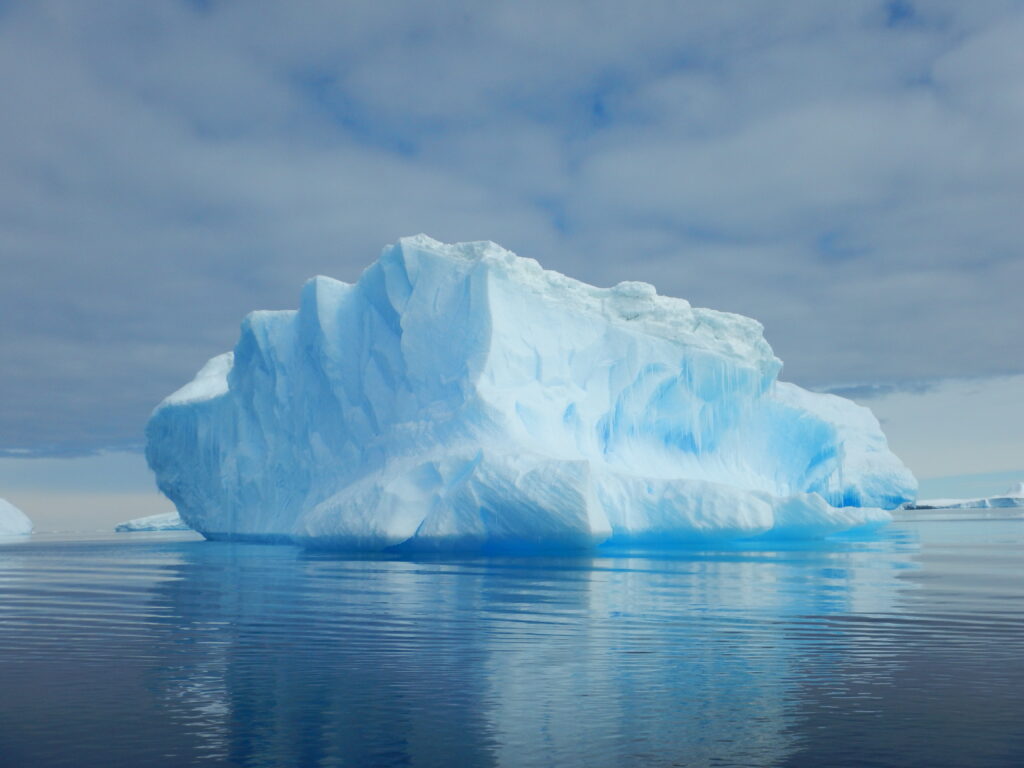
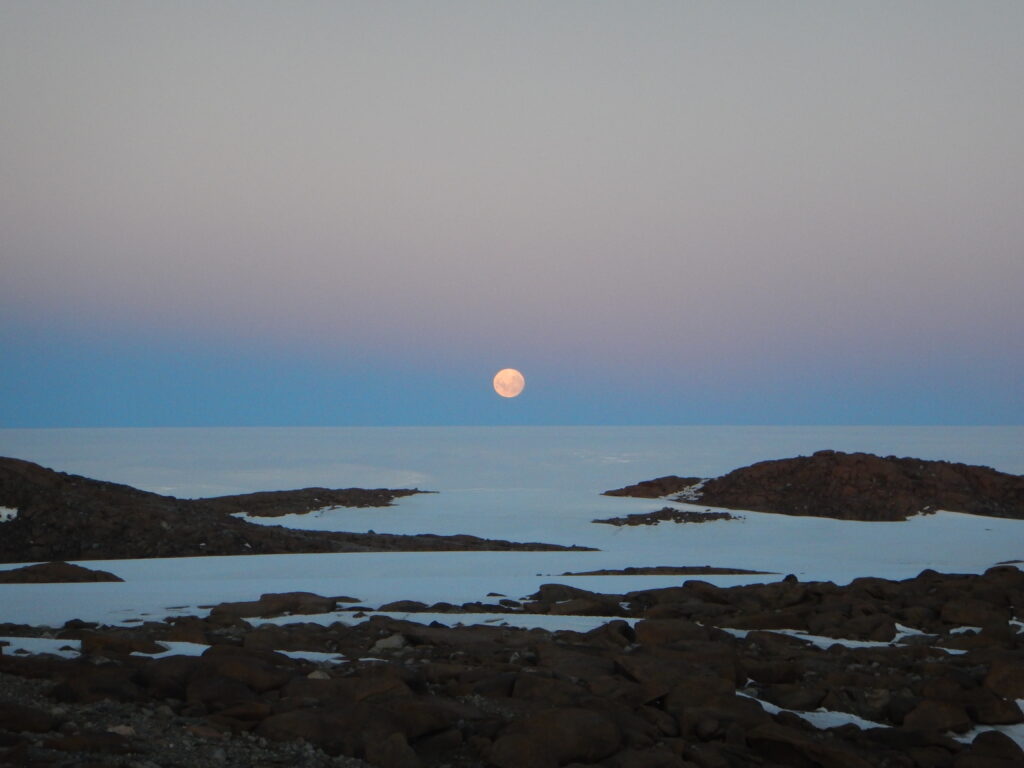
Dr Felicity McCormack, a Chief Investigator with SAEF, studies Antarctica’s impact on sea-level rise. An iceberg near Casey Station, East Antarctica. Credit: Felicity McCormack Full moonrise on the Browning Peninsula, East Antarctica. Credit: Felicity McCormack

The study’s results could have huge implications for insurers, urban planners and international policy experts, as it will mean that resilience can be built in with comparatively high confidence for 30 to 50 years—the shorter end of the planned lifespan for most major infrastructure.
As a result, coastal defences, zoning decisions, insurance models and help for low-lying nations may all have a clearer path forward than expected. But we must use it wisely, says McCormack.
Resilience runway
Beyond mid-century, Antarctica’s ice loss predictability begins to fray. The study shows that the tight relationship between present and future ice loss weakens steadily, dissolving by roughly 2080 as complex feedback mechanisms take hold. These include processes triggered when ice resting on land below sea-level retreats, potentially leading to rapid and irreversible ice loss.
McCormack emphasises that capturing the nature of the land and ocean floor beneath the ice, as well as improving modelling of ice-retreat dynamics, is essential for reliable predictions beyond mid-century.
For now, while the white continent hides many of its secrets, it may offer us a rare window of clarity for some very wise futureproofing.
Read more
McCormack, F.S., Morlighem, M., Pattyn, F., Robel, A.A. & Seroussi, H.L. (2026). Emergent decadal predictability in Antarctic contribution to sea level rise. Nature, 654 (8120), 609–613 https://doi.org/10.1038/s41586-026-10614-4


